Wednesday, 16 August 2023

Legacy Blog: Kate McElroy reflects on her 4 years as Public Engagement Artist at Uillinn

Worlds within words, Kate McElroy, Uillinn 

Gallery tours were always a highlight of my job. It never ceased to surprise me how insightful people are when responding to art. People’s natural ability to decipher work and create meaning from what they see was immensely inspiring for me.

The second summer of my time at Uillinn was my first studio residency there. I was undertaking a Masters in Art and Process in MTU Crawford, and our studios were temporarily shut so the residency at Uillinn was of huge significance. Public engagement being the main aspect of my job and an integral part in my art practice, I decided to do tours of an exhibition of my own work. I became very interested in the Visual thinking strategies method and used this as the foundation of my tours. I wanted to turn the usual tour dynamic on its head and have the visitor’s viewpoint as the centrepoint. Perception and how each individual interprets and creates meaning uniquely has always fascinated me. 

Kate McElroy collage, Uillinn

Visitors could book tours one on one or in small groups and they proved to be fertile ground for conversation and meaning making. People commented on how nice it was to be asked instead of told. These tours ended up being very formative for how I conducted tours in the time that followed. I tried to focus on the visitors' experience and draw out from them their own insights in an open and non-judgmental manner. There can be apprehension for people when talking about art, people are often afraid of getting it ‘wrong’. I find it important that the open-ended nature of art is emphasized, and it is within its ambiguity that much of its significance lies. 


Researching and creating dynamic workshops and creative responses to the exhibitions was also an aspect I reveled in. Nose diving deep into the work to try and scope the artist's motives, methods and thematics was always a pleasure. One such example was The Interactive Museum of languages exhibition by Tomasz Madajczak and the Mother Tongues Festival. The aim of the show was to encourage curiosity in languages for young people with Tomasz building beautifully crafted, interactive works. For my part, I researched words that exist in other languages but not in English.


Again, I was interested in the idea of perception, could alternative words and concepts open up new ways of seeing or thinking about the world? The word that sparked this interest was kobade: a word I came across in As we have always done by indigenous scholar Leanne Betasamosake Simpson. It means a link in a chain – ‘a link between generations, between nations, between states of being, between individuals’. This concept Kobade invites awareness of our interconnectedness throughout time and space. One child’s comment to the project which included a gallery tour, workshop, classroom visit and exhibition of their work was.


‘I never knew that there were words missing in the English language. This project made me realize that.’ -Tara, Primary school participant


Kate McElroy and Sérgio Leitão, Uillinn
I curated children's exhibitions and the artists exhibitions in the stairwell and link galleries which developed into a strong interest for me. In my own art practice, I try to stretch traditional modes of presentation and display and I found this tendency also emerge in my approach to curation. Being creative with the concept and the framework is something that I really enjoyed, again trying to bend or open new modes of seeing is an intrinsic motive that underlied my approach.


Being an artist is something that was really nurtured in my time here and being given the freedom to allow my personality and interests sprout in my approach to working methodologies is something I am truly grateful for. The thing I will remember most from my time at Uillinn is the warm feeling I get every time I am in the building and that is because of the sincere, encouraging, and loving approach of the whole team at Uillinn. I can’t imagine a more supportive unit to have been a part of and it is a unique aspect of Uilllinn that many of the people who spend time here comment on. It is with the most heart full thanks and appreciation that I transition from this position, but its nurturance will stay as a constant scaffold in my life.


I am not the only one who finds it difficult to leave Uillinn and an online platform I set up during Covid lockdowns called Uillinn Coffee meetup for people related to Uillinn to keep connected will continue. The rhizomatic nature of Uillinn with hyphae all over the world continues to keep growing and quietly nourishing, an impalpable undergrid system permeating across space. Kobade in the making. 


Brian Fay, Gaelscoil Dr Uí Shuillabhain, exhibition tour 2023 

Kate McElroy, Uillinn West Cork Arts Centre https://www.westcorkartscentre.com/kate-mcelroy1


Kate McElroy's Website https://www.katemcelroy.com/


Interview with Leanne Betasamosake Simpson, The White Review  https://www.thewhitereview.org/feature/interview-with-leanne-betasamosake-simpson/


Friday, 4 August 2023

Ham Sandwiches and Discipline: A Chat with Nóra Ní Anluain Fay and Sorcha Murphy

In the lead up to a festival week sharing of their performance piece 'Ham Sandwiches and Discipline', I arranged to have a chat with Uillinn Dance Resident Nóra Ní Anluain Fay and her longtime collaborator Sorcha Murphy. By the time I got a chance to sit down with them in their studio space in the Arts Centre they had just managed to do a run through of their work-in-progress and seemed relaxed and jovial ahead of meeting their upcoming Uillinn audience. 

Ham Sandwiches and Discipline, Nóra Ní Anluain Fay, July 2023

Planned to evolve into an hourlong piece, 'Ham Sandwiches and Discipline' is the brainchild of Uillinn Dance Resident Nóra Ní Anluian Fay, who grew up watching and attending GAA matches and being immersed in the world of it. She became taken with the idea of combining a sports world she loved with that of her artistic landscape. I asked Nóra about the process of developing new dance work and different ways in which residencies and festivals can assist in doing so.


“Well I’ve started properly making in the last two years since I changed department in college and the whole prospect of making always seemed to happen quite quickly in terms of generating content but it’s always been about having creative spaces and dancers as well that are willing to go for it.” 


Nóra elaborates that she found her training in The Netherlands allowed her to get started in building up a body of short scale work but to now have residencies and spaces that allow her to really delve deeper is the next step, “Having a space to dissect work has been great. So has having spaces like Scene and Heard to try out stuff, which is the role of that festival. Basically anything that can help us understand the work more and help us develop it.”


I turn to Sorcha for her thoughts about her Uillinn experience and her mind seems to be on scaling up creatively too, “This experience has been quite different to other ones because it’s so open and the piece is going to be an hour long. We’ve never made an hourlong piece before and it’s been super nice to have this space and the opportunity to do that because our other pieces were in the context of college and assignments.”


Nóra and Sorcha met in Dublin Youth Dance Company and were guided by their teacher Mariam Ribon to Fontys Dance Academy in Tilburg, The Netherlands. Nora shares that after her first two years of college she started to get drawn towards choreography and made the switch in focus for her third and fourth years. “That’s where I found movement language and kind of settled in more and started to figure out the type of work I’m interested in and what I want to make as well.” They now have three main pieces which they want to expand, which will be a focal interest moving forward.


I take this point in the conversation to ask about the topics and themes of previous work to get a sense of what to expect from their Uillinn showcase. “I get inspiration from other areas completely,” says Nóra. “Like ’Usual Programming’ was about reality TV and dating shows. ‘Let Them Eat Cake’ was about the social politics in parties and the last piece we did, ‘You Gotta Trust that the Future is Going to Be a Bit Sexy,’ which we will be doing here at the Uillinn in November, is all about coming of age and growing up.” 


Both artists’ responses around questions of thematics veer towards accessibility and affording an ethos of dance being for everyone and Nora asserts that topicality can be key to achieving this through their performances. “They’re all kind of universal and equally personal topics and we’re hoping that they can be accessible for anyone and everyone in that way because dance can be kind of an abstract language that can be hard to enter sometimes or to feel welcome to.”


“I think that the pieces all have a sort of more serious message or undertone but because of the comedic elements,” says Sorcha. “You can just take what you want from it so you could just watch it and think, “Oh that’s a funny piece. It was really enjoyable,” or you could, if you wanted to delve deeper into it, take different meanings for yourself.”


For Nóra, imbuing the work with a sense of tonal duality, if not complexity, offers autonomy for audiences to decide how they want to read it and Sorcha appears to be in emphatic agreement. And what strikes me most immediately about speaking to both of these collaborators together is how cohesive and considerate they are of discursive space. 


Nóra and Sorcha’s patterns of communication around their work seem clear, unmuddled and secure. There are no conversational collisions for the entire duration of the chat and I’m later unsurprised to see a similar flow and freeness to their dance cohesion. I inquire if approaching comedy topics in particular is helped along by the fact that they have been long-time collaborators and if that provides a level of comfort and complicity.


“I think it has worked really well that we have known each other and danced together for so long,” says Sorcha, “Because we met when we were 16 and then we went to the Netherlands together, I have a really good understanding of Nora but also Nora’s work, which makes it easy to work together and I immediately know what she is looking for and what the tone is.”


“There’s a shorthand there,” agrees Nóra, “We definitely have that sense of a safety net with each other but we also find that we have the same sort of taste or preferences in terms of dance and art in general. We strive for the same quality and tones and characteristics within work. So if I can make Sorcha laugh with something then I know it’s the right direction so it’s a good springboard or signpost to know how an idea will work.”


Overall Nóra states that bridging main disciplines and tones and genres together is the main engine of the work they do so that the forefront of the work is dance and physical theatre merging together. “Then tonally a lot of more dramatic or serious notes come in as well along with the more comedic silliness and cheekiness,” she adds.


In one hilarious sequence of 'Ham Sandwiches and Discipline', Nóra and Sorcha perform a highly gesticulated choreography of post-match TV panellists providing a post game dissection in what I can only describe as (and this is not a technical term) hand dancing. Nora attributes this sequence to an afternoon spent watching The Sunday Game on TV and it being a somewhat formative moment of the piece itself.


“I think I first had this idea a couple of years ago about making a piece about GAA when I was watching The Sunday Game after one of the matches,” She explains, “I just saw the commentators hands and how expressive they were and that there was so much articulate movement in them. From there I was beginning to see a piece or at least elements of a piece coming together.” 


This piece has been a different bag for Nóra research wise as she has found herself really zeroing in on GAA culture at grassroots level. “Normally I use so many sources to create a piece but for this one it’s actually been quite loyal to the GAA and surrounding culture as a primary source.”


She has been reluctant to resort to any sort of obvious merges between sport and dance such as forcing themselves to physically bring the ball into it and both artists appear to have taken the most enjoyment and inspiration out of getting to know the players from O'Donovan Rossa junior ladies team. 


For Sorcha especially it has been a brand new learning experience. “It’s been interesting, especially for me because I am not in that world at all,” She says, “I don’t know anything about GAA so I have learned a lot these past two weeks but it was super nice to speak to the women on the junior ladies team and we got so much that we could put into the piece.” 


She elaborates, “A lot of the things they brought up was not about the sport itself. It was more about the connections that they make and how appreciative they are of everyone- the people who clean the fields, the people who drive them there and back.” I ask if any members of the team will be coming to see the sharing and both artists express that they hope so.


“We saw them play a match a few days later,” says Nóra, “After having spoken to them and knowing their mindset a bit and seeing them in action to kind of make the connection and transfer between those two points. It was a lovely, lovely insight into it.


When Nóra says, “They’re part of the piece now too,” it’s clear how much the GAA players’ input has meant in making the most out of their time at the Uillinn and converting the makings of a dynamic dance duet into a genuine team effort.


NAF Dance Website https://www.nafdance.com/


Nóra Fay Dance Ireland Residency https://www.danceireland.ie/whats-on/events/dance-ireland-residency-nora-fay/


Wednesday, 5 July 2023

Interview with Uillinn Dance Resident, Bea Bidault

Bea Bidault taken at Uillinn, 3rd June, 2023
In my first few weeks working at the Uillinn I got a chance to sit down with dance resident Bea Bidault to have a chat about her work-in-progress, Les Nuages. At the time of this conversation Bea was in the final stages of preparation for a sharing from Les Nuages where members of the public were invited to the dance studio to get an insider view of Bea’s work. 

“This sharing,” Bea explains, “is just an extract of a work in progress which started as an R&D in January in Lisbon with Connor Scott. We spent a week there and we developed some of the ideas and this is the continuation of that R&D so I’m spending this week on my own to research a little bit further. It’s not supposed to be a solo piece, it’s supposed to be a group piece or at least a duet. So it’s slowly coming into shape.”

A native of Barcelona via training in London, I asked Bea about her impressions of West Cork and how her experiences of Skibbereen have been.

“Well it’s a very beautiful part of the world. I had an amazing time even though it has been a short week and I have mostly been in the studio. I have been to the lakes and I have seen bioluminescence. That has brought me a lot of joy.”

She has also been taking the opportunity to find commonality with local people in Skibbereen, including her host, of whom she speaks warmly, ”I have been staying in town with Lisa Coughlan (one of the recommended West Cork hosts for artists in residence at Uillinn) which has been amazing and we have been just chatting and discussing the piece’s themes and other things.” 

Bea demonstrates an openness to draw inspiration from people from other walks of life, “I just think that having this opportunity to talk to people who grew up here and do things very related to dance because she uses somatic practices, and using movement to help others, it has been very interesting and very inspiring as well.”

I asked her about her own creative practice and how she approaches the themes in her work and she points to philosophers such as Byung-Chul Han, Silvia Federici and Franco Berardi, “I like this idea of using philosophy as a way to describe the present. I think it’s like looking through some lenses to see how the present is being shaped and how that is contrasting the past or even other ideas of how society could be.”

When prompted to discuss some of the main themes she wishes to tackle with her work, Bea appears to have cultures of consumption clearly in her line of sight, “I think this idea of neoliberalism and how we are exploiting ourselves. And our body, our personality, our identity becomes a tool to function in this society because I think consumption and capitalism are much embedded. We have this idea of becoming better or acquiring more knowledge and competing amongst ourselves to find this success.”

She elaborates further on the perils and pitfalls that neoliberal value systems pose to communities and individuals, “I think that is a trap because we put a lot of pressure on ourselves to become something and to be always achieving so that we are always in this place of unsettledness and dissatisfaction. And also that just brings more loneliness and alienation in the community because we are becoming more self-centred and therefore more narcissistic.”

Bea hopes that even if dance is viewed as a very abstract form to meet these challenges and pose these questions, that these ideas can be effectively and interestingly explored and contested through the artform.

I was curious about what form the process of devising a new dance piece might take; whether there is a clear destination in sight or whether the devising journey is relatively open-ended so I asked Bea about her own experiences and outlook on this process.

“I think there are some ideas I have that I would love to create so I am working towards those,” she acknowledges although she does remain open creatively, “The aim is to get these main things done but obviously the journey is going to determine whether I find some new images and how the whole piece is going to be shaped by them.” 

A particularly striking aspect of Bea’s Les Nuages sharing has been her use of a clear plastic suit and a smoke machine, which make it clear that costumes is something that Bea appears to consider of immense importance for this piece.

“I am still looking for a costume designer,” she shares, “and then to have an R&D with them. It’s possibly going to be the most influential part of the work because it’s going to be determining if some of the images are possible or not, or maybe the costumes are going to bring other possibilities that I had not thought of yet.” 


Bea Bidault's residencies at Uillinn: West Cork Arts Centre (https://www.westcorkartscentre.com/bea-bidault)

Bea Bidault's website (https://beatrizcalzado25.wixsite.com/my-site)


Sunday, 14 August 2022


A Forest Sounds Like a Ship at Sea:

Roots and Branches

Day 26: Remote Residency at Uillinn: West Cork Arts Centre, Skibbereen, Ireland, 7/18/22 to 8/13/22,  Maria Driscoll McMahon checking in from New York State


Life has a way of talking to the future. It’s called memory. It’s called genes.

                                                                                                Richard Powers, The Overstory


Meanwhile, I could not have taken on a project of this magnitude without the help of many people. 

First of all, my Aunt Sylvia Hilfiger née Driscoll, from whom I first learned of the ancestral village called "Baltimore."  Without her explorations I would not have known a thing about our ancestry. 

Aunt Sylvia (in center) in Baltimore a few decades ago


Aunt Sylvia today who is still sharing stories, memories, clippings, photographs!


Margaret Walsh, Dixie Gross, Christine Bedford


From left: Yours truly, Margaret Walsh, Dixie Gross, Christine Hilfiger, 
all descendants of Cornelius O'Driscoll

Margaret Walsh and I were MEANT to meet, which we did just a little over a month ago! Margaret is a distant cousin and was actually born in the house that Cornelius and his family built! She so very generously shared memories and allowed us to finally experience "the clearing" Cornelius commenced almost 200 years ago! When I went to the Bradford County History Museum, I found more than a few documents and articles written by none other than Margaret herself! How lucky are we all to have met this amazing woman, who, not only worked as a registered nurse, but acted as Supervior of her department at the Robert Packer Hospital up until her retirement a few years ago. 

Dixie Gross, another 5th or 6th cousin of mine has done probably more work than anybody on our genealogy.  After corresponding off and on for several years, it was great to finally meet this remarkable world traveler in person a couple months ago!

Christine Hilfger Bedford is my beloved first cousin and daughter of Aunt Sylvia. We grew up together and I cannot tell you how wonderful it is that we are sharing this adventure together! Her students are very lucky to have such a kind and curious teacher!

Many other people helped me in my research - historians, arborists, conservationists, educators, artists...


Henry Farley, President, Bradford County Historical Society 
Matt Carl, Executive Director of the Bradford County Historical Society

Denise Golden, Library Clerk in Research Library
Ms. Pelton, Volunteer Assistant in Research Library
Jonathan Gulyas

Dan Rhodes, Education Coordinator
Adam Chorba, Forest Specialist
Rich Gulyas, Mt. Pisgah Environmental Education Specialist

Daniel Weitoish, Lead Arborist


(Our Lady of Perpetual Help Church was built by people 
of the 19th century Irish Settlement)
Father Toomey
Secretary: Mary Cole

Terri Kearney
Margaret Murphy

Friends, Cousins,  Artists who encouraged, advised, helped me
Cate Bourke
Aurelio Catano
Scott Greene
Richard Gulyas 
Kathy Kirwan, Irish artist (Clonakilty)
River Santina
Séamus Ó Drisceoil, Irish entrepreneur and conservationist (Dublin and Cape Clear)
Marie Deese Driscoll, O'Driscoll Clan Chieftain, Irish artist (Sherkin Island)
Kerry O’Driscoll
Denise O'Driscoll


SPECIAL THANKS: If I started naming EVERY artist/friend who helped/advised/encouraged me, the list would go on forever, but I would like to single out John Knecht for his generosity in sharing a bit of his process with me. I have admired John's work ever since it blew my mind upon seeing it at the Everson Museum in Syracuse, NY about a decade ago. Not only does it dazzle with its visual feats of animation, but the content resonates long after initial viewings.  Thanks for the inspiration, John!   John Knecht (johnknechtart.com)


Special thanks to: 
Uillinn: West Cork Arts Centre, Skibbereen, Ireland
Ann Davoren, Director
Justine Foster, Programme Manager
Louise Forsyth, Front of House Co-ordinator and Communications Assistant
Kate McElroy, Public Engagement Assistant
Jackie O'Callaghan, Administration Assistant


A Forest Sounds Like a Ship at Sea 
will screen at the Uillinn: West Cork Arts Centre in a year from now!

Follow my (monthly) blog for updates to the project at  www.mariadriscollmcmahon.com


FINAL BOOK BIBLIOGRAPHY:

1)  The Overstory by Richard Powers | Goodreads 

2)  Sacred Trees of Ireland by Christine Zucchelli | Goodreads 

3)  Wild Woods: The Magic of Ireland's Native Woodlands by Richard Nairn | Goodreads 

4)  American Canopy: Trees, Forests, and the Making of a Nation by Eric Rutkow | Goodreads 

5)  Remarkable Trees of the World by Thomas Pakenham | Goodreads 

6)  The Hidden Life of Trees: What They Feel, How They Communicate: Discoveries from a Secret World by Peter Wohlleben | Goodreads 

7) Barclay Mountain: A History  Bradford County Historical Society (bradfordhistory.com) 

8)  The Fir Tree Map of the Beara Peninsula & South West Cork Sheet map folded 

9) Orwell's Roses by Rebecca Solnit (goodreads.com)

10) An Indigenous Peoples' History of the United States, Roxanne Dunbar-Ortiz

11) Lough Hyne – From Prehistory to the Present – Skibbereen Heritage Centre (skibbheritage.com)

12) Skibbereen: The Famine Story by Terri Kearney and Philip O'Reagan

13) Animation Sketchbooks by Laura Heit (goodreads.com)

14) Baltimore Castle: An 800-year History Bernie McCarthy

15)The Chieftain's Daughter by Marie D Driscoll

16) The Textile Trilogy – Destiny Kinal

17) Wisdom of Trees by Jane Gifford

18) Pilgrim at Tinker Creek by Annie Dillard | Goodreads

Saturday, 13 August 2022

A Forest Sounds Like a Ship at Sea:

A requiem, a cry, a scream, a hope...

Day 25: Remote Residency at Uillinn: West Cork Arts Centre, Skibbereen, Ireland, 7/18/22 to 8/13/22,  Maria Driscoll McMahon checking in from New York State


Tomorrow is the last day of my residency, so I guess it's time to wax philosophical after nearly a month of rapid note taking. It is also a good time to address the purpose of research for artistic pursuits for those who may wonder what any of this has to do with art.  The truth is that even though methods may differ,  many artists are like scientists in their curiosity and fervent desire to know stuff.  Research is one tool available to both scientists and artists. Another less recognized tool is drawing (or painting, sculpture, dancing...etc.) itself.  Yes, Drawing is a tool for learning. It is also a tool for change, but hopefully that idea has become better establihed.


Drawing helps us think better At its core, drawing is a problem-solving tool. Scientists are often avid doodlers, like the Fields-Medal-winning mathematician Maryam Mirzakhani, for instance. “The process of drawing something helps you somehow to stay connected,” she explained in a 2014 interview. “I am a slow thinker, and have to spend a lot of time before I can clean up my ideas and make progress.”


Believe it or not, in my experience, the most interesting artists tend not to draw things they know - at least not completely. (The most interesting things seem to be unknowable anyway.) Rather, it seems that artists almost always draw things they WANT to know; abstractions of thought or feeling they WANT to understand; things they WANT to learn - things like rocks and trees and the way the light falls on your face and planets and stars and BEINGS that walk and crawl and fly and speak by rubbing their limbs together until a fusion of bone or cambium turns them all into gemels emerging from shimmering portals of other  dimensions! (See yesterday's post about gemels and you'll see what I did there!)  

Thinking of art as anything other than a tool for the artist's exploration and expression of wonder, curiosity, thought, and feeling is, in my view,  misguided: it is an error in thinking that demands "expertise" but quells wonder in a world where information is instant and ubiquitous (and misinformation even more so!), but wonder is in short supply. 

What the world needs now is love goes the song... but wonder is a close second. In fact, I would say that wonder IS love. 

So...A Forest Sounds Like a Ship at Sea is, first and foremost, my vehicle for learning about forests and trees and lots of other things on its most basic level. Even more so, it is my vehicle for learning about the ways in which forests and trees are like ourselves in ways previously unknown or comprehended. 

It is also as I previously described, a requiem, in part, for forests past, a cautionary tale - no, a cry, a scream - for forests present, and hope for forests future. It is an "offshoot" of my previous project, By the Time You Cut Teeth You Are Already Ancient, which was one part meta-genealogical investigation, one part spiritual quest, one part cautionary tale.

A Forest Sounds Like a Ship at Sea was inspired by walks in the woods and reading Overstory, a book that forever changed the way I think about trees. In it,  Richard Powers, writes like a poet and anthropomorphizes trees in a way that is fully informed by science. It was the anthropomophism that changed me. 

My previous body of work focused on my Irish paternal ancestors; for this project, I wanted to focus on their habitats - those they left behind in West Cork Ireland and those that awaited in Pennylvania.

Also, in order to answer the deceptively simple question that resonated in my brain "If you were a tree, what would you be?"  I needed to learn a whole lot about trees (and "you"). Why is this seeming, but very unsilly question important?  Because we tend to care about things if we can see something of ourselves in them.  Richard Powers understood this in Overstory. Thus, these walks in forests with new eyes - and ears - these talks with conservationists, arborists, natural scientists, historians, artists, and fellow descendants of Cornelius O'Driscoll were essential. (I will name some names tomorrow!) 

Evil is the refusal to see one's self in others.
                                                                    Richard Powers, author of "Overstory"

During my residency,  I met a Chestnut Tree (among many other trees), an oddball overachiever which towered over many of the neighboring trees.  Sadly, the Chestnut, infected with blight, would soon meet the same fate as its predecessors.  Known as the "sequoia of the east," the massive old growth forests of "Penn's Woods" were frequently dominated by American Chestnut Trees. This would all come to an end by the end of the 19th century. 

Since then,  I have discovered that all the forests in the United States (and beyond) are in trouble in one way or another - almost all due exclusively to the short-sighted exploitation of natural resources by European colonists (including my own ancestors) - an exploitation that still happens today. 

Clear-cutting entire forests and burning fossil fuels has led to climate change which leads to extreme weather - including droughts and floods, creating conditions for which our delicately balanced habitats are ill adapted. Another scourge is invasive pests which can be exacerbated by climate change as well. 

Here in Pennsylvania and New York State stately, elegant ash trees are falling prey to the emerald ash borer beetle.During my trip to the F.R. Newman Arboretum at Cornell University, I was saddened to find many of them had been felled and chopped up into logs to prevent further infestation of neighboring trees. 

Infected ash trees at the F.R. Newton Arboretum at Cornell University (left), and in Ridgebury, Pa. 


There are also many threats to Hemlock trees including the wooly adelgig, hemlock looper, and borer among others. 

Beech Leaf disease affects Beech Trees.  Oak wilt can compromise the mighty Oak.  Locust Leaf Miner can maim a Locust. 

Climate Change affects the proliferation of parasites such as spongy moths and other pests (some invasive) as well rendering habitats too wet or too dry. Floods, droughts - all exacerbated by a warming planet can mean the difference between the survival of entire forests or death. 

"Ghost forests" like this one at Botany Bay, South Carolina, are increasing up the east coast as erosion is whittling away at the coastline.

The sad fact is that most every species of tree is under some sort of threat: almost every forest. Whether besieged by invasive pests, drought, floods, fires, logging, fracking, agriculture, human habitation, development for commerce, rising seas leading to erosion and drowned forests, the proliferation of diseases due to climate change, leveling rain forests for cheeseburgers - the list goes on and on.  

If we don't learn from the past and our indigenous forebears  - some of whom are still living in harmony with the natural environment - (that's in the U.S., Ireland, or many places on the planet),  the habitats of the earth will decline and their inhabitants will vanish soon after. In the case of the trees of the forests, they are both inhabitants and habitat! If that is true of any other creation, I'm not aware of it at this moment. 


HOPE!


But, yes, there is hope through reforestation efforts worldwide. Planting with biodiversity in mind rather than monoculture will ensure longevity and habitats for diverse species.  Planting trees is not a panacea - we still need to work to reduce carbon emmissions through the use of green technology and energy systems to solve our problems (not to mention population control). But as trees eat carbon, they are a viable and beautiful part of the plan to slow and reverse climate change. Also, restoring forests will solve other problems as well. Restored forests will mean shelter for those who live there - human and non-human beings alike. 


I want to share a small reforestation effort happening in the O'Driscoll ancestral homeland in West Cork on Oileán Chléire (Cape Clear Island), site of Dún An Óir, one of the most forlorn and romantic ruined castles you will ever see.   


Cornelius O'Driscoll, the first of my paternal Irish ancestors to settle in the United States hailed from West Cork. The Cape Clear Woodland project below may be a small undertaking, but if everybody did their part, the planet would become a less threatened habitat.
Alder and birch saplings at Oileán Chléire at the Cape Clear Woodland, Plantings and Photos by Séamus Ó Drisceoil of Dublin, Ireland


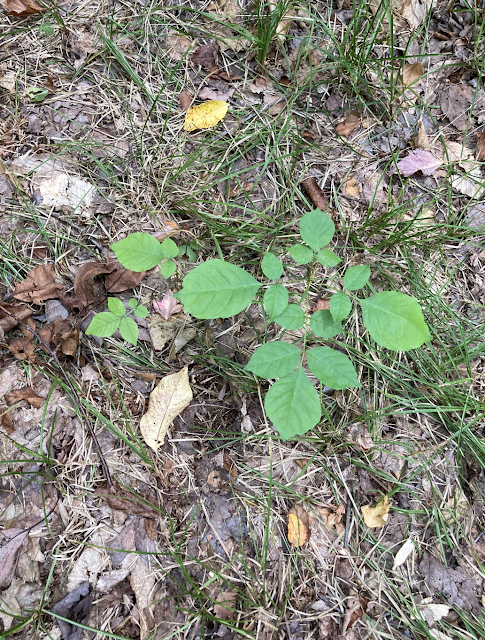
Across the pond, a baby ash tree grows wild in the forest where the Suquehannocks once lived,  wolves roamed, chestnut trees grew, and Cornelius O'Driscoll - fleeing famine and hardship - would find refuge for his family in the mid 19th century "unbroken wilderness" of Ridgebury, Pennsylvania. 

Life has a way of talking to the future. It’s called memory. It’s called genes.

                                                                                                Richard Powers, The Overstory