Friday, 22 July 2022

A Forest Sounds Like a Ship at Sea:

Heart of Oak

Day 3: Remote Residency at Uillinn: West Cork Arts Centre, Skibbereen, Ireland, 7/18/22 to 8/13/22,  Maria Driscoll McMahon checking in from New York State


"Angel Oak," Charleston, South Carolina, Spring 2022


Heart of oak are our ships, 

Heart of oak are our men: 

We are always ready; 

Steady, boys, steady...

David Garrick, 1759

The Wisdom of Trees by Jane Gifford (goodreads.com)


A question I have been entertaining of late is  If you were a tree what would you be?

Although the question may sound as if it had been designed by a hacker to steal identities, Richard Powers must have asked this question of his characters in his book, The Overstory, because he assigned various trees to many of them. For example,  there is “Doug Pavlicek, who becomes “Doug-fir;” Mimi Ma is “Mullberry;” Adam Appich is “Maple;”  and Olivia earns the moniker, “Maidenhair.”

He named some of the characters based upon trees that happened to be growing where the characters lived. In other cases, though, the characteristics of the trees are descriptive of the people, too. 

Since I am asking a similar question of the very real characters in my own non-fictitious story, beginning with Cornelius, it is important to know what the habitats were like where my ancestors lived, both in Ireland, and in mid-19th century Pennsylvania.  

I have already sought the expertise of people who have provided me with some insights. Dan Rhodes, Bradford County Conservation District Education Coordinator, for instance, has been extremely helpful in painting a picture of the mid-19th century Ridgebury, Pennsylvania landscape. Upon his arrival, Cornelius would have been confronted with the aforementioned "unbroken virgin wilderness" which he promptly "commenced to 'clear.'" According to Dan, it would have consisted of h
emlocks, white pines, chestnuts, oaks, hickories, elms, maples - with several others...in various densities - but most likely he would have been cutting a hemlock, pine, and chestnut dominated forest.

A conversation with naturalist, Richard Gulyas, confirmed Rhodes' assertions and also added that the virgin "old growth" forests Cornelius would have encountered (and cleared) would have included up to a foot of leaf litter. Earthworms brought from Europe, however, served in its decomposition and within 100 years, the soil composition would be forever changed, exacerbating the rise of fungi which would infect many species of trees, including the great American Chestnut.  More on that in the next blog post. 

From my own google-searches seeking understanding of mid-19th century Southern Irish habitats, I sense that, in addition to many species of trees not found in Ridgebury, oak trees comprised many of the woodlands in West Cork such as in Glengariff Woods and the mystical, submerged oak forest, The Gearagh. I still have much more research to do, however, and would love to be directed to sources of further information. 

To learn about the Irish Settlement of Ridgebury, Pa., I am working with the historians at the Bradford County Historical Society Museum and Research Center: Library Clerk, Denise Golden; Volunteer, Donna Pelton; Director, Matt Carl; and the historian who has written much about the Irish of Bradford County, Henry Farley. I just spoke with Henry last night who told me all the residents of the Irish Settlement - the Driscolls, the Sullivans, the Donovans, etc. (the tombstones at "Our Lady of Perpetual Help" cemetery read like the storefronts I remember in Skibbereen!)  hailed from Skibbereen and Clonakilty! With those words, the question "From where in Cork did my ancestors hail?" was solved. I plan also to resume consultations with the historians and geneaologists, 
Terri Kearney and Margaret Murphy, at the Skibbereen Heritage Center In Ireland. 

I will provide more details about the Irish in future posts!

So, if Cornelius O'Driscoll were a tree, what would he be?

Asking the question of oneself is hard enough. It would seem to entail harboring heaps of knowledge about trees (I don't) and - perhaps, even more challenging - something about oneself (a work in progress!). 

But to ask it of people, long dead, with little more than a few census records or words of description to provide insight into personalities, character traits – even physical appearances - seems like an a fool’s errand.

And yet I persist!

Using what I know thus far of Cornelius O'Driscoll,  one might determine he would have been an oak tree based solely on the species of trees common to both Ridgebury, Pa. and County Cork, Ireland.

But I am much more interested in matching the deeper characteristics of trees with what I know (and what I suspect) about my ancestors and, perhaps, the Irish in general. I begin with Cornelius, because he was not only the first of my own ancestors to arrive in Ridgebury, but he was the first of the Irish to arrive in what would be known as "The Irish Settlement." 

Fortunately, there are books, internet resources, and - best of all - people all around me who know A LOT about natural science and history who can fill in the gaps!

Of course, this is foreshadowing my own intention to indulge the anthropomorphism of trees (and perhaps other flora and fauna) via drawing and animation in my own work.  Scroll down to see just a few samples of many art historical precedents!


Saint Jerome in Penitence (c. 1509) by Lorenzo Lotto

Hieronymus is of gerar, that is holy, and of nemus, that is to say a wood. And so Jerome is as much to say as a holy wood. Or it is said of noma, that is to say law, whereof is said in his legend that Jerome is interpreted a holy law. Jacopo de Voragine, “The Life of St. Jerome,” The Golden Legend (13th c.) https://www.degruyter.com/document/doi/10.1515/9789048535866-004/pdf


                                                   Tree Man, Hieronymus Bosch, 1505


By Toriyama Sekien (鳥山石燕, Japanese, *1712, †1788) 

About the photo:  According to the legend, the tree Jinmenju produces fruit that has the face of a human child. These faces don’t speak, but they smile and laugh all the time. If they laugh too exuberantly, they fall to the ground. The fruit is both sweet and sour, and the seeds inside also resemble human faces.   Miss Cellania  4 Legendary Plant-Animal Hybrids | Mental Floss


Wednesday, 20 July 2022

A Forest Sounds Like a Ship at Sea:

A tree will be your mirror

Day 2: Remote Residency at Uillinn: West Cork Arts Centre, Skibbereen, Ireland, 7/18/22 to 8/13/22,  Maria Driscoll McMahon checking in from New York State


Base of a Box Elder (tree), photo taken on Catharine Valley Trail, Montour Falls, NY, Summer 2022

"Trees mirror in many ways the life cycle of human beings: they are born from seed, they breathe and drink, they grow to maturity, reproduce and eventually die from age or disease. Their branches, roots, and the veins of their leaves resemble human blood vessels, and certain species even ooze a reddish, blood-like sap when damaged." from Sacred Trees of Ireland by Christine Zucchelli | Goodreads

In addition to Sacred Trees of Ireland, I've been reading the glorious book, The Overstory, in which the author, Richard Powers, writes with the beauty of a poet and the precision of a scientist. He also does something surprising - he anthropomorphizes trees in a way that is very self-aware and with solid scientific basis. While I have surely always adored trees, I never actually "related" to them past the age of 10 - or, perhaps I should say I never would have felt comfortable relating to them - until reading Overstory.

Imbuing animals, trees, and other natural entities with "human" qualities has been the practice of our species for millennia. Practitioners of spiritual traditions all over the world, past and present (including the Celts), recognize that we have more in common with non-human beings than not. Still, many in the contemporary world who adopt a more detached, scientific view of the world eschew anthropomorphism because it can lead to misinterpretation of animal - or in this case - plant "behaviors." This can be innocuous or it can be dangerous; thinking a bear wants to be friends, for instance, when she just wants her RDA of vitamins and minerals can even be fatal.

However, many more who have no interest in science view animals and plants as inert "objects," because seeing the "human" in the "non-human" can make it much more difficult to regard the natural world as existing almost exclusively for human utility!

It is my hope that A Forest Sounds Like a Ship at Sea serves to assist in rousing feelings of connection with non-human beings. I believe these feelings are innate, but have historically been educated out of us. New scientific research, however, provides confirmation for what many of us intuitively knew even as children: that sentient, sapient, "social" life forms are all around us.

More on this - and, yes, drawings - to come!


Tuesday, 19 July 2022


A Forest Sounds Like a Ship at Sea:

The "ship"

DAY 1: Remote Residency at Uillinn: West Cork Arts Centre, Skibbereen, Ireland, 7/18/22 to 8/13/22, Maria Driscoll McMahon checking in from New York State


"By the Time You Cut Teeth You Are Already Ancient," Gallery Aferro, Newark, NJ, 2/22/20

Four years ago I travelled to Ireland for the first time. It ignited a passion for discovery – of both my own ancestry and the history of Ireland – particularly West Cork. And so began my body of work By the Time you Cut Teeth you are Already Ancient, described as one part “meta-genealogical investigation, one part spiritual quest, one part cautionary tale.” I did many drawings for that project (some of which were to happen during my Uillinn: West Cork Art Centre residency originally scheduled for summer of 2020) which have been exhibited in three solo exhibitions (one of which I shared with my collective, 2x2) at galleries and universities.  The photo above was taken in 2020 as I continued to make more drawings for the project.  You can learn more about that body of work here: www.mariadriscollmcmahon.com  and here By the Time You Cut Teeth You Are Already Ancient.


My new work in progress is an “offshoot” (pun intended!) of the former, but rather explores the habitats – particularly the trees - of my Irish paternal ancestors – both before and after emigrating from Ireland.
 

Surprisingly enough, my wild curiosity about the habitats was aroused, in part, during my daily walks on my own tiny plot of land which turns out to be only 25 miles from where Cornelius O’Driscoll – weary scout from Ireland – and the first of my Irish ancestors to come to America in the mid 19th century, built his log cabin in Ridgebury, Pa. It was there, in the “unbroken Pennsylvania wilderness” where “Cornelius commenced his clearing,” as reported by the Reverend David Craft in the tome, History of Bradford County, Pennsylvania, 1770-1878.  Four years later, he would return to Ireland to bring his family and friends to join him in the new frontier. 


In sum, the little forest I enter every day without fail has become my "ship" connecting continents, centuries, and the living and the dead. 


In addition to drawing in preparation for an animation/projection (the process of which I am learning), my research during this residency will entail contacts with natural scientists, conservationists, historians, the priests serving "Our Lady of Perpetual Help Church," in Ridgebury, Pa. (which my own ancestors helped to build in the mid-19th century), visits with descendants of the original immigrants who established the "Irish Settlement" in Ridgebury, Pa., internet articles, and lots of yummy books, including:


1)  The Overstory by Richard Powers | Goodreads 

2)  Sacred Trees of Ireland by Christine Zucchelli | Goodreads 

3)  Wild Woods: The Magic of Ireland's Native Woodlands by Richard Nairn | Goodreads 

4)  American Canopy: Trees, Forests, and the Making of a Nation by Eric Rutkow | Goodreads 

5)  Remarkable Trees of the World by Thomas Pakenham | Goodreads 

6)  The Hidden Life of Trees: What They Feel, How They Communicate: Discoveries from a Secret World by Peter Wohlleben | Goodreads 

7) Barclay Mountain: A History  Bradford County Historical Society (bradfordhistory.com) 

8)  The Fir Tree Map of the Beara Peninsula & South West Cork Sheet map folded 

9) Orwell's Roses by Rebecca Solnit (goodreads.com)

10) An Indigenous Peoples' History of the United States, Roxanne Dunbar-Ortiz

11) Lough Hyne – From Prehistory to the Present – Skibbereen Heritage Centre (skibbheritage.com)

12) Skibbereen: The Famine Story by Terri Kearney and Philip O'Reagan

13) Animation Sketchbooks by Laura Heit (goodreads.com)

14) Baltimore Castle: An 800-year History Bernie McCarthy

15)The Chieftain's Daughter by Marie D Driscoll

16) The Textile Trilogy – Destiny Kinal


Many thanks to all the folks mentioned above who have helped me already. I will be sure to name names at a later date! I could not do this research without you!


A Forest Sounds Like a Ship at Sea

Day 1, Part 2: Remote Residency at Uillinn: West Cork Arts Centre, Skibbereen, Ireland, 7/18/22 to 8/13/22,  Maria Driscoll McMahon checking in from New York State


(Video: 4 1/2  minutes of footage taken in a young forest )


The inspiration for A Forest Sounds Like a Ship at Sea  came, in part, during one of my daily walks when  the wind was whipping up and I wrote (in my head at first) a poem which I entitled “Intruder,” the first line of which I decided would be the title of my work during my residency here at the Uillinn: West Cork Arts Centre.  


Intruder

A forest sounds like a ship at sea,
a creaky pirate
pinnace
g r o a n s
curses
shrieks of girls
delight
or fright
snorts of
whales,
laments
(A rock removed is a
depression
so deep
it empties the
foot.)
moans

Whose prints these are I think I know -

A hole
an inverse heap.
“the way I say!”

(Rimmed with fuschia, the doe’s ears glowed and

"My hands turned to dandelions!"

{Thanks for the blessing, James Wright!})

Ahhhhh….where can I go on this arc,
this wood, this mound,
where I do not follow and am not
followed?

Maria Driscoll McMahon, October, 2020


Some mornings I find remnants of tumultuous nights – sticks the circumferences of swords piercing the ground like ex-caliber,  limbs lying akimbo in the path where my feet want to pass. It all is an apt metaphor for  the story of  "those who came before" who speak to me during these walks. 


The video is 4 1/2 minutes and I find it almost as mesmerizing as the days I gathered the footage when the trees were talking to me.  One thing I didn't notice during "real time" was the phenomenon known as "crown shyness," so apparent to me here in the video!   What Is Crown Shyness? (treehugger.com) 


Moreover, I am beginning to learn which trees, or which limbs, are the poets, which are the orators, which are the cussers/the noisemakers/the activists, and which are the quiet ones.  I also take note of the fallen.  I recognize that the most loquacious trees are often the most vulnerable. After all, the limbs that talk are also the limbs that bump and scrape each other - sometimes to the point of breaking.  Those outspoken limbs - the ones who made the most noise, now dismembered, are henceforth silenced. Forever.


Friday, 10 June 2022

Engaging in the Arts at Uillinn: A young person’s perspective.


The Uillinn Arts Centre offers workshops/classes in art, dance, and theatre for young people; having these types of resources are very important for the wellbeing of local youth. For a lot of people who aren’t involved in sports it is difficult to find a place outside school to meet with and engage with people with the same interests, even though schools often have drama and art clubs, I feel that people want something not associated with school, especially because school can be negative place with exams and pressure. It is hard to be in a creative mind space in a school environment. For people who are home schooled being part of the Uillinn has positive benefits too. Giving them the opportunity to be an individual and develop their creativity through drama, the arts or dance.


Uillinn has become a welcoming home to me these past few years” - MICH, 18


I joined the Rusty Frog Youth Theatre Group when I was 15 and being home-schooled. Home-schooling can unfortunately have a negative reputation but mainstream school doesn’t suit everyone, particularly those who are more creative.
In 2020, my normal became everyone’s normal and suddenly everyone was taught ‘at home’. Suddenly people couldn’t meet up with friends. Then it became more important than ever to have a close group. During the Covid Pandemic the Rusty Frog Youth Theatre went on zoom. Although it couldn’t replace meeting in person, I still looked forward to it each week. We managed to adapt to the circumstances and did two performances over zoom, one of which we performed live and the other we filmed beforehand and edited. It was challenging but fun getting used to performing in a very different way.


“the art centre gave me a place to explore more of the dance world” - Hetty, 17


I am 18 now and looking back on the last 3 years joining the Rusty Frog at the Uillinn exposed me to a lot of opportunities I wouldn’t have ever been a part of e.g., being part of the Guerrilluinn Youth Rep Committee, mixing music for the production of ‘Deano’, designing the poster for my last performance with the Uillinn ‘Box of Frogs’ and writing a monologue for a play that I went on to perform for the audition that got me into the drama course I’ll be starting in September. I even had the opportunity to take part in auditions for the National Youth Theatre. Since then, I have studied art at college and with the RBGE. I am very lucky to have been involved in theatre at the Uillinn and in the words of Seán O'Casey, 'All the worlds a stage and most of us are desperately under rehearsed.’


“The Uillinn provides an integral creative space as here is a lack of artistic infrastructure in the west cork area. being a member of the rusty frog youth theatre has helped me boost my self-esteem and made me a more outgoing and confident individual” - padraig, 18


https://www.westcorkartscentre.com/Guerrilluinn

#Guerrilluinn

The remit of Uillinn Youth Arts Committee is primarily to inform and advise on the development of Uillinn’s children and young people's programming.
The current membership formed in September 2021. There are 7 members representing Uillinn Young DancersRusty Frog Youth TheatreDraw Mind Matters and Creative Schools programmes all programmes that take place at Uillinn West Cork Arts Centre.
Dance: Hetty Gazzaniga & Amy Jennings, Creative Schools: Lucia Madajczak, Youth Theatre: Padraig Harrington & Charlie DeLacey, Draw Mind Matters: Mich Maguire & Hannah O’Driscoll.
With an age range from 14 to 18 years old, they proudly represent the diversity in our community with representation from LGBTQI+ community, young people living with disability and learning difficulties, and wide socioeconomic and cultural background.
Approximately four meetings take place each year (4 already in 2022, so more this year as this group have high ambition). Meetings are 2 hours long and include creative explorations and administrational tasks. At meetings and through their WhatApp group they are learning about the programme, residencies, exhibitions and the Centres management is integral. Volunteering and supporting at events is encouraged. 
Uillinn Youth Arts Committee are currently seeking funding to lead a research residency at Uillinn and public art project in the town with a view to increasing the number of young people engaged in Arts and arts programme.

Friday, 15 October 2021

Uillinn Dance Season - Dēmos

Uillinn Dance Season is about to begin - which from my experience working at Uillinn the last two years - covers the finest selection of dance performances you are likely to see, not only in the county but the country. In preparation for the upcoming performances, I spoke to the choreographer, Liz Roche, who will be bringing us the opening event in the main gallery.

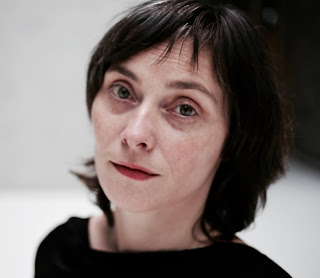
Liz Roche 

Liz was born and raised in Dublin. Her Cork connections come from her father's family, who are from Cork City, with her grandparents living in West Cork for the last 10 years of their lives. Passionate about dance from a young age, Liz left school at 15 and like most young people wanting to be dancers in Ireland, left and went to train in London. After completing her training, Liz worked as a contemporary dancer in Ireland, throughout Europe, the UK, and for choreographers from the United States.

During this period, Liz created her own dance company, Rex Levitates Dance Company, with her sister Jenny, who is also a dancer. During the company's beginnings, Liz continued gaining experience by working in theatre and opera productions. Over time, her sister pursued a more academic route so Liz became Artistic Director, and the company became Liz Roche Company.

Ever since the company has been producing one large and one smaller-scale work each year. This work typically tours Ireland and Europe. Aside from their performances, Liz's company also does community outreach projects, developmental programmes and much more besides. Liz's goal is to 'connect with people and audiences to develop and raise awareness of dance'. In 2020, she was rewarded for this work when her peers nominated her as a member of Aosdána, one of Ireland's highest artistic achievements.

Fast forward to today and Liz has completed her latest body of work 'Dēmos - films of separation and togetherness with composer David Coonan and filmmaker Josē Miguel Jiménez. Dēmos refers to the Greek word meaning democracy.

In development since 2019, the piece was originally planned as a performance piece for a large stage with many dancers involved but those plans fell through once Covid-19 hit. Liz then evolved the work and made it into a film with that film currently touring.

The film director is José Miguel Jiménez. Liz has known José for many years, describing him as 'a creative person who knows dance very well'.

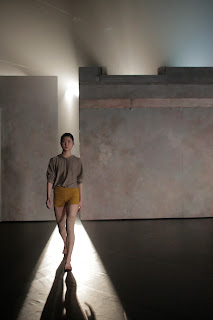
Dancer Yumi Lee

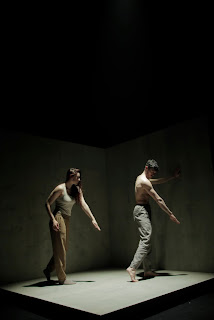
Soon Dēmos - films of separation and togetherness will reach Uillinn, where it will be transformed from a film set in a theatre into an installation piece in a gallery space with projection and live performances. These performances will be by cellist Kate Ellis and dancers Emily Terndrup, Luke Murphy and Yumi Lee, with composition by David Coonan, recorded and performed by new music specialists Crash Ensemble.

Liz described the work as having themes of 'separation and togetherness' and what those words mean as they relate to us in today's society. As the performances were initially created for a big stage, they have an epic quality to them but throughout the process, Liz has moulded the performances to become more 'gentle, grounded, and intimate'. Liz added that 'Life is often so dynamic so it is nice to be able to make something that shows the softer, more intimate side of life'.

Dancers Emily Terndrup and Luke Murphy

If you're like me, you might not have much knowledge or understanding of contemporary dance. It may seem too vague and hard to pin down. During my time at Uillinn I've learned to not look at contemporary dance too literally. I would watch these performances and I'd be racking my brain as to what they were supposed to mean or what the performance was trying to get across. As soon as I quietened the analytical side of my mind, I found myself appreciating the movements and music for their own merit. Dance is so unique, present and alive that sometimes you just need to let it happen to you. Liz hopes that more people can give contemporary dance a chance because it is such a rewarding experience.

Liz aims to make the piece as accessible as possible to as many people as possible so if you want to get this rare opportunity to see Liz's new work in Skibbereen, please visit Uillinn West Cork Art Centre on October 22nd. For more information please visit: https://www.westcorkartscentre.com/uillinn-dance-season-2021-liz-roche-dance-company